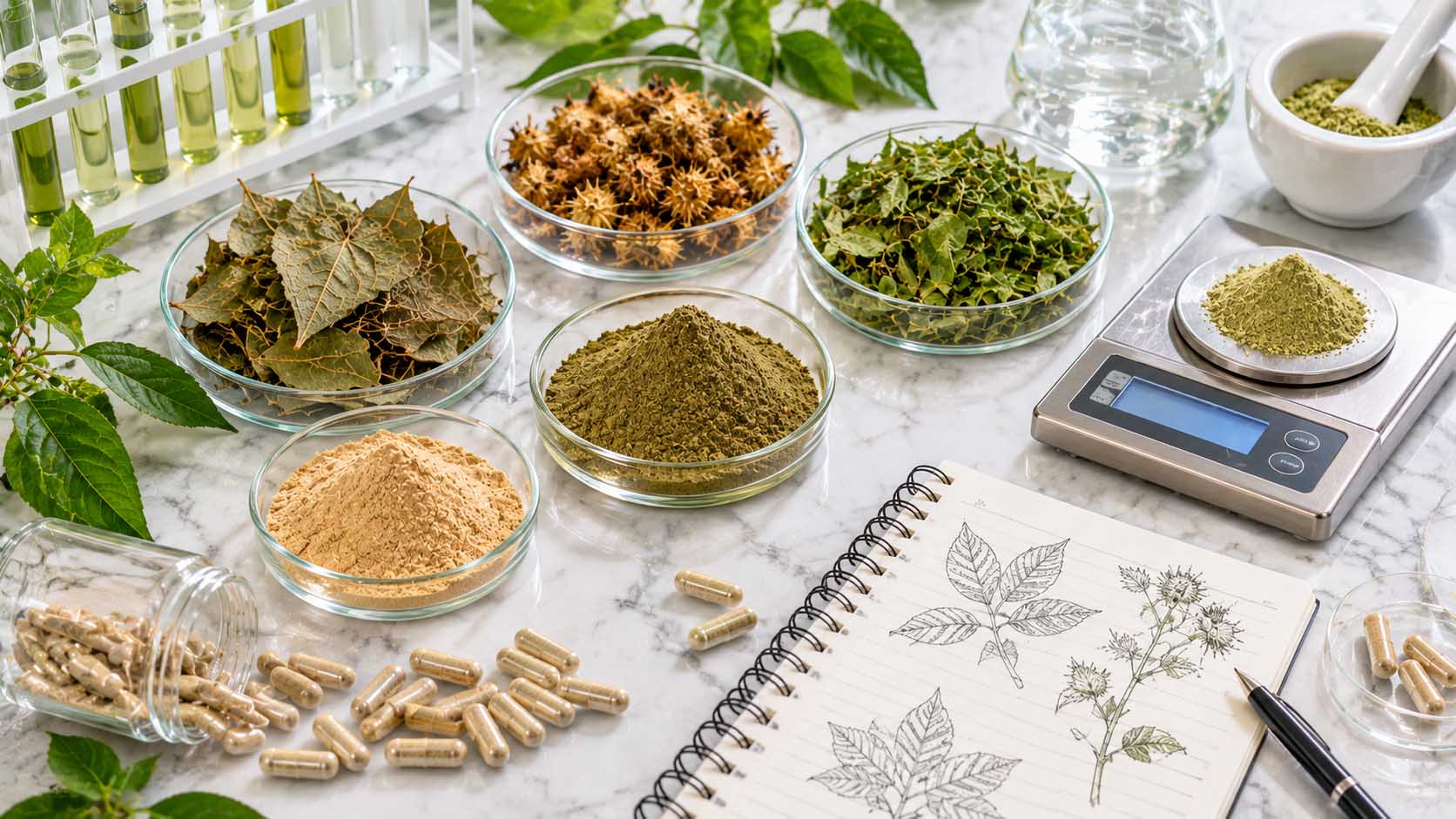
Multi-ingredient herbal formulas combine two or more plant-derived substances within a single dietary supplement. Manufacturers develop these formulations by selecting botanical extracts with different chemical properties, traditional applications or proposed biological functions.
Unlike single-ingredient supplements, botanical blends introduce additional complexity because their ingredients may interact with one another. Understanding these combinations requires examining individual botanical properties, ingredient concentrations and scientific evidence involving the finished formulation.
Why Manufacturers Develop Multi-Ingredient Herbal Formulas
Men’s dietary supplements frequently contain several botanical ingredients rather than relying on a single plant extract.
Manufacturers may design these combinations around different aspects of general wellness, including physical vitality, energy metabolism and sexual health.
A formulation might combine ingredients traditionally associated with endurance alongside botanical substances investigated for their potential influence on vascular or neurological processes.
However, combining several ingredients does not automatically produce greater effectiveness. Each combination requires appropriate evaluation to determine whether its proposed benefits have scientific support.
Common Ingredients in Multi-Ingredient Herbal Formulas
Several plant species appear in dietary supplements marketed for male wellness. Their traditional applications and chemical compositions vary considerably.
Epimedium
Epimedium is a genus of flowering plants commonly associated with traditional East Asian herbal practices.
Certain species contain icariin, a flavonoid compound that researchers have investigated for its potential biological activities.
Although laboratory research has explored mechanisms relevant to vascular function, reliable human clinical evidence remains limited.
Tribulus Terrestris
Tribulus terrestris is a flowering plant containing naturally occurring steroidal saponins.
Traditional herbal practices have associated this botanical with vitality and sexual wellness. However, research examining its effects on testosterone levels and physical performance has produced inconsistent findings.
Its presence in a supplement does not establish that the product increases testosterone.
Damiana
Damiana, scientifically known as Turnera diffusa, is a shrub native to parts of the Americas.
Its leaves have historically appeared in herbal preparations associated with relaxation and sexual well-being.
Despite its traditional popularity, substantial human clinical evidence supporting specific sexual health benefits remains limited.
How Multi-Ingredient Herbal Formulas Are Combined
Developing a multi-ingredient supplement involves more than selecting several recognizable herbs.
Formulation specialists must consider ingredient compatibility, chemical stability, extract concentration and manufacturing consistency.
Several types of ingredient relationships are possible.
| Ingredient relationship | Description |
|---|---|
| Additive | Combined effects approximately equal the individual effects |
| Synergistic | Combined effects exceed the expected additive effects |
| Antagonistic | One ingredient reduces another ingredient’s effect |
| Independent | Ingredients act without meaningfully influencing each other |
Manufacturers sometimes describe botanical combinations as synergistic. However, demonstrating genuine synergy requires experimental evidence rather than assumptions based on traditional ingredient uses.
Understanding Ingredient Standardization
Botanical materials naturally vary according to growing conditions, harvesting practices, plant species and extraction methods.
Standardization aims to reduce some of this variability by maintaining specified concentrations of selected chemical constituents.
For example, an extract may contain a defined concentration of flavonoids or saponins. This information can help researchers and consumers compare preparations more accurately.
When examining products such as VigRX Plus or reviewing herbal supplement information through Natural Health Source, consumers should consider individual ingredient disclosures, extract specifications and available evidence concerning the complete formulation.
A standardized ingredient may offer greater chemical consistency, but standardization alone does not establish clinical effectiveness.
Research on Multi-Ingredient Herbal Formulas
One of the most important considerations when evaluating multi-ingredient herbal formulas is the distinction between ingredient-level research and finished-product research.
A clinical study involving a single botanical extract may use a particular concentration, preparation method and administration schedule.
A commercial formulation containing that same botanical may use a different extract or quantity. Additionally, other ingredients within the blend could influence its absorption, metabolism or biological activity.
Therefore, positive findings involving one ingredient cannot automatically establish that a combined supplement produces equivalent results.
Finished-product clinical research provides more directly relevant information when investigators evaluate the actual formulation under controlled conditions.
Do More Ingredients Make a Supplement Better?
A longer ingredient list does not necessarily indicate a higher-quality supplement.
Formulations containing numerous botanical substances may provide limited quantities of individual ingredients. Moreover, additional ingredients can introduce greater uncertainty regarding interactions and adverse effects.
Consumers should consider several practical questions:
- Does the manufacturer identify each botanical species?
- Are individual ingredient quantities clearly disclosed?
- Does the formulation have relevant human clinical research?
- Are potential adverse effects and interactions explained?
- Does the available evidence concern the finished product or only isolated ingredients?
These questions provide a more meaningful basis for evaluation than simply comparing the number of ingredients.
Safety Considerations for Combined Herbal Supplements
Combining botanical substances can complicate safety assessments, particularly when individuals take prescription medications or manage chronic health conditions.
Certain ingredients may influence blood pressure, blood glucose regulation, blood clotting or medication metabolism.
Furthermore, identifying the cause of an adverse reaction may become more difficult when a supplement contains multiple active compounds.
Consumers should share complete ingredient lists with a physician or pharmacist when discussing supplement use. Products marketed for sexual enhancement should not replace medical evaluation or established treatments for erectile dysfunction.
Evaluating the Complete Botanical Formulation
Multi-ingredient herbal formulas represent complex combinations of plant-derived compounds rather than simple collections of independent ingredients. Their quality and potential effectiveness depend on ingredient identity, concentration, formulation compatibility, manufacturing standards and relevant clinical evidence. By examining the complete formulation instead of relying solely on familiar botanical names or traditional associations, consumers can make better-informed decisions about men’s dietary supplements and their potential role in personal wellness.