Knowing what happens after winning an online car auction helps buyers complete their purchases without unnecessary delays, unexpected charges, or paperwork problems.
Winning the bid is usually the beginning of the final transaction process rather than the end. Buyers must follow the auction provider’s payment instructions, obtain ownership documents, arrange vehicle collection, and complete registration requirements.
The exact procedures depend on the auction platform, vehicle location, seller, and applicable state laws.
However, most purchases follow a similar sequence, beginning with confirmation of the winning bid.
What Happens Immediately After Winning an Online Car Auction?
After the auction closes, the winning bidder generally receives a notification or purchase confirmation.
This communication may include the winning amount, applicable fees, payment deadline, and instructions for completing the transaction.
However, not every highest bid automatically results in a completed sale.
Some auctions use reserve prices or require seller approval before confirming a transaction.
Therefore, buyers should verify that the sale is final before arranging transportation or making other commitments.
Review Your Purchase Confirmation
Check the following information carefully:
- Vehicle identification number (VIN)
- Winning bid amount
- Auction buyer fees
- Seller approval status, if applicable
- Payment deadline
- Vehicle pickup location
- Required ownership documents
If any information appears incorrect, contact the auction provider through independently verified communication channels.
Step 1: Confirm Payment Requirements After Winning the Auction
Payment deadlines vary between automotive auction providers.
Some require payment shortly after the sale, while others provide a longer processing period.
Missing the deadline may result in penalties, cancellation, or other consequences under the auction’s terms.
Therefore, buyers should review payment requirements before bidding rather than waiting until they win.
Confirm the Total Amount Due
The final invoice may include more than the winning bid.
Depending on the transaction, additional expenses may include buyer premiums, administrative charges, applicable taxes, and other disclosed fees.
Review each charge against the auction’s published terms.
In addition, confirm the payment recipient independently before transferring funds.
Verify unexpected changes to bank account information through an established contact method.
Step 2: Obtain Ownership Documents After an Online Car Auction
Ownership documentation is essential for transferring and registering an auction vehicle.
The required paperwork depends on the vehicle’s title status, selling state, and transaction structure.
Bill of Sale
A bill of sale generally records the transaction between the buyer and seller.
It may identify the vehicle, purchase amount, transaction date, and participating parties.
However, a bill of sale does not necessarily replace a certificate of title.
Vehicle Title
The title establishes important ownership information and may identify liens or title brands.
Before accepting the paperwork, confirm that the VIN matches the purchased vehicle.
In addition, review any salvage, rebuilt, or other title classifications.
If the seller cannot immediately provide the title, request a clear explanation of the expected delivery process.
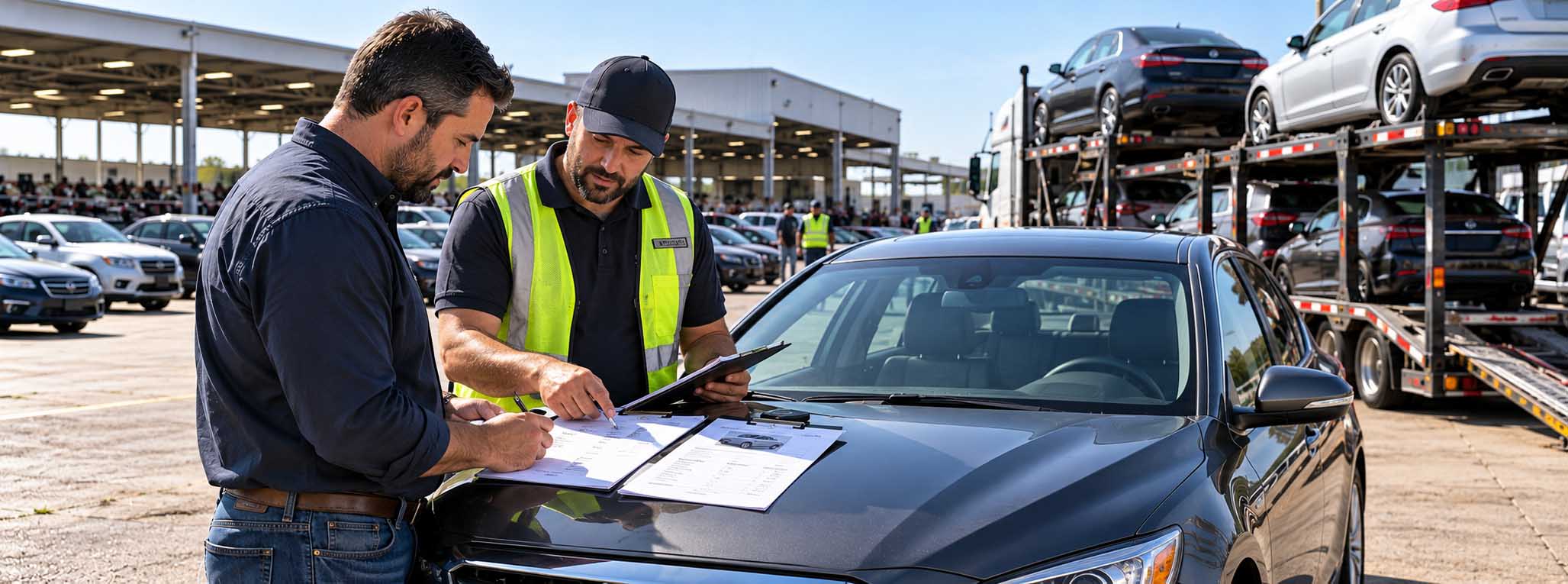
Step 3: Arrange Vehicle Pickup After Winning an Online Car Auction
Most auction facilities have specific procedures for releasing purchased vehicles.
Buyers may need to provide identification, payment confirmation, or a release authorization.
Some facilities also require transportation companies to present pickup documents.
Confirm the Collection Deadline
Auction providers may impose storage charges when vehicles remain at their facilities beyond the permitted collection period.
Consequently, buyers should arrange pickup promptly after receiving the required authorization.
Verify the Vehicle’s Operating Condition
Do not assume that a purchased vehicle can be driven away.
Some auction vehicles may have mechanical problems, missing keys, damaged tires, or other conditions that prevent normal operation.
Confirm these details before selecting a transportation method.
Step 4: Arrange Transportation After Winning an Online Car Auction
Vehicle collection is an important responsibility after winning an online car auction.
Depending on the circumstances, buyers may collect the vehicle personally or hire an automotive transport company.
Professional transportation may be necessary when the vehicle is located far away or cannot be legally driven.
Before booking a carrier, confirm the pickup address, loading requirements, and delivery arrangements.
In addition, ask about transportation insurance and the procedures for reporting damage.
Verify the Transportation Provider
Before hiring a carrier, check its business information and confirm the services it offers.
For interstate vehicle transportation in the United States, buyers can use the Federal Motor Carrier Safety Administration’s consumer resources as a starting point for understanding transportation-related consumer safeguards.
However, vehicle transport services may follow requirements that differ from household-goods moving services.
Therefore, confirm the carrier’s applicable operating authority, insurance arrangements, and service terms before booking.
Step 5: Complete Post-Sale Procedures After Winning an Online Car Auction
Different auction platforms may follow different payment, document processing, and vehicle release procedures.
Therefore, buyers should examine the specific provider’s terms instead of assuming every online auction operates identically.
For example, someone researching learn about vehicle auctions should first verify the website’s current business information and published services, then confirm any applicable post-sale procedures directly before relying on them.
Important questions include whether the provider issues electronic invoices, how ownership documents are delivered, and who authorizes vehicle collection.
Clear answers help buyers coordinate the transaction more efficiently.
Step 6: Arrange Insurance Before Using the Vehicle
Insurance requirements depend on applicable laws and the vehicle’s intended use.
Before driving the purchased vehicle, buyers should confirm that appropriate coverage is active.
If the vehicle will travel through a professional transportation service, ask the carrier about its insurance arrangements.
However, carrier coverage and personal automobile insurance serve different purposes.
Buyers should understand what each policy covers rather than assuming transportation insurance provides complete protection.
Step 7: Complete Registration After an Online Vehicle Auction
After receiving the required ownership documents, buyers generally need to complete the title transfer and registration process.
Requirements vary by state.
Depending on the circumstances, the process may involve:
- Submitting the assigned vehicle title
- Providing a bill of sale
- Paying applicable taxes and registration fees
- Completing a VIN verification
- Obtaining required inspections
- Providing proof of insurance
Vehicles purchased from another state may require additional documentation.
Therefore, buyers should consult their state motor vehicle agency for the applicable requirements.
Step 8: Inspect the Vehicle After Delivery
Once the vehicle arrives, examine its condition before beginning regular use.
Compare its VIN, mileage, and visible condition with the available purchase documents.
Look for transportation damage and identify any mechanical concerns requiring attention.
If a professional carrier transported the vehicle, document discrepancies promptly according to the carrier’s claims procedures.
In addition, consider a mechanical inspection before operating a vehicle with an uncertain maintenance history.
Common Mistakes After Winning an Online Car Auction
Several avoidable mistakes can complicate the post-auction process.
- Missing payment deadlines: Delays may lead to additional charges or cancellation.
- Ignoring title requirements: Missing or incorrect ownership documents can delay registration.
- Waiting too long to arrange pickup: Storage charges may accumulate.
- Assuming the vehicle is roadworthy: Mechanical problems may make driving unsafe.
- Overlooking insurance: Buyers may lack appropriate coverage during vehicle use or transportation.
- Failing to save transaction records: Missing documents can create difficulties when resolving disputes.
Planning for these responsibilities before bidding helps reduce post-purchase complications.
Frequently Asked Questions About Online Auction Purchases
Can You Cancel After Winning an Online Car Auction?
Cancellation rights depend on the auction’s terms and applicable law.
A winning bid may create a binding purchase obligation, so buyers should review the rules before participating.
How Long Do You Have to Pay After Winning?
Payment deadlines vary between auction providers.
The purchase confirmation and published auction terms should explain the applicable deadline.
Can Someone Else Pick Up Your Auction Vehicle?
Some facilities permit authorized third-party collection.
However, identification and release documentation may be required.
When Do You Receive the Vehicle Title?
Title delivery depends on the seller, auction procedures, and applicable documentation requirements.
Buyers should confirm the expected timeline before completing payment.
Final Thoughts: What to Do After Winning an Online Car Auction
Understanding the responsibilities after winning an online car auction helps buyers move from a successful bid to a completed vehicle purchase.
Payment confirmation, ownership documents, transportation arrangements, insurance, and registration all require careful attention.
By reviewing auction terms, meeting deadlines, and maintaining accurate transaction records, buyers can reduce avoidable complications.
A successful auction purchase is complete only when the buyer has satisfied the transaction requirements, received the appropriate documentation, and arranged lawful possession and use of the vehicle.